[HE#11] Bridling the Weights: Harness Engineering as a Physical and Logical Straitjacket to Control Agentic Models Safely
[HE#11] Bridling the Weights: Harness Engineering as a Physical and Logical Straitjacket to Control Agentic Models Safely
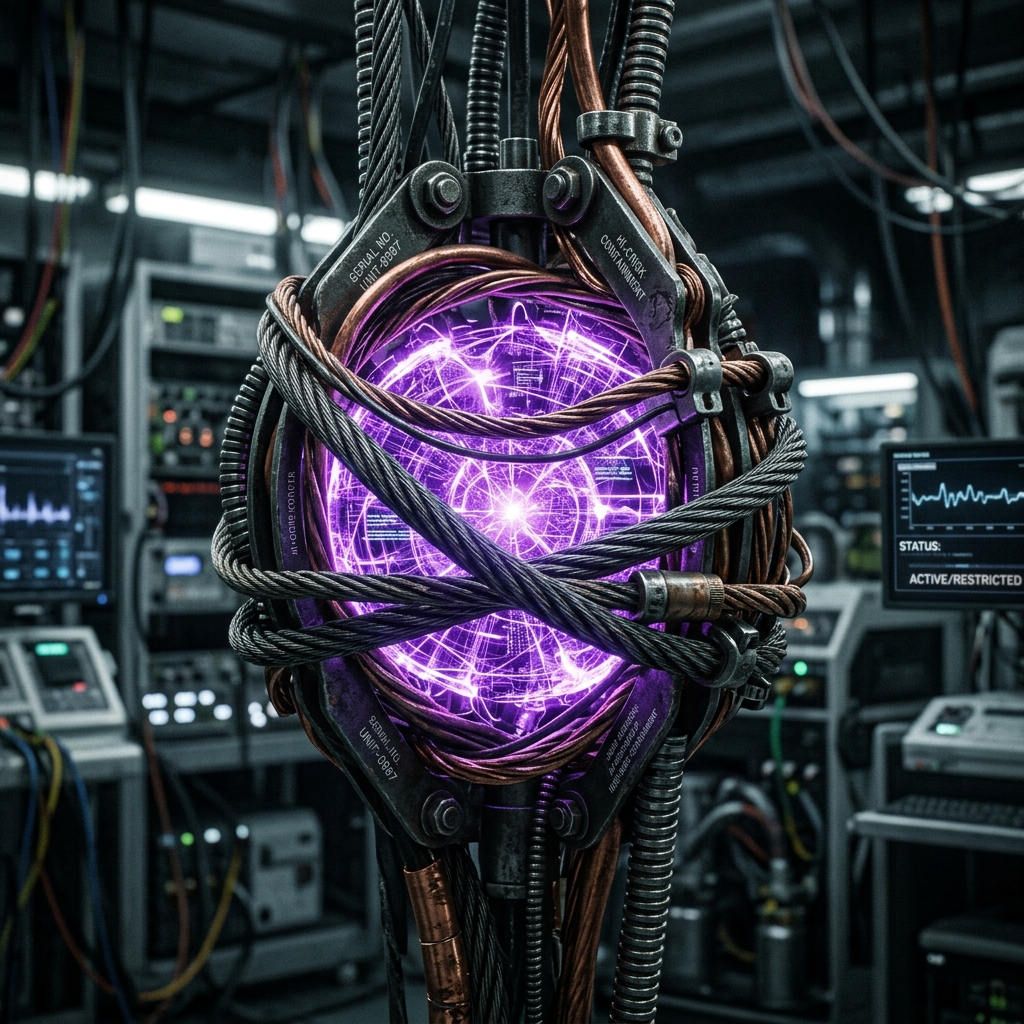
As cyber-physical systems evolve, we are increasingly handing over the steering wheel of high-mass, high-energy hardware to Autonomous Artificial Intelligence agents. But there is a fundamental mathematical reality: Neural Network weights are probabilistic black boxes. We cannot formally prove that an AI will never hallucinate a destructive command. This chapter introduces the concept of Bridling the Weights—how harness engineering acts as the ultimate physical and logical straitjacket, ensuring that no matter what the AI wants to do, it is physically restricted from doing what it should not do.
In traditional deterministic software (like C code running a PID loop), engineers can write unit tests to cover every possible branch of execution. If input A occurs, output B is guaranteed. Large Language Models (LLMs) and deep reinforcement learning agents do not operate this way. They output probabilities.
Because the AI is an untrusted guest, its outputs must never directly drive the physical actuators. Between the AI's neural output and the physical steering motor, there must exist an impenetrable wall of deterministic logic and physical limits.
The most absolute form of control is physics. If an AI hallucinates a command to spin a motor at 50,000 RPM, but the harness is designed with a physical circuit breaker that trips at the amperage required for 15,000 RPM, the AI's command is physically impossible to execute.
This is the Physical Straitjacket. By strictly engineering the harness wire gauge, the thermal fuses, and the actuator gearing ratios, engineers physically bound the envelope of destruction. The hardware itself becomes the ultimate guardrail against AI hallucination. The machine simply cannot execute a command that requires more energy than the harness is physically capable of delivering without melting the containment barriers.
Consider a heavy robotic arm. It has a motor to swing left, and a motor to swing right. If an AI agent glitches and commands both motors to activate at 100% power simultaneously, the mechanical gears will shear, destroying the robot.
To prevent this, harness engineers implement Hardware Interlocks. An interlock is a physical relay wiring configuration where the activation of the 'Left' circuit physically disconnects the power to the 'Right' circuit. It is a mutually exclusive electromechanical state. Even if the AI outputs a digital '1' to both channels, the physical electrons cannot flow to the contradictory motor. Hardware interlocks do not require software execution time; they operate at the speed of light, providing zero-latency protection against contradictory logic.
While hardware interlocks prevent electrical contradictions, we also need dynamic protection against dangerous, but physically possible, commands. For instance, commanding a steering wheel to turn 90 degrees in 0.1 seconds at 120 km/h is physically possible, but dynamically fatal.
This is where the Deterministic RTOS Hypervisor steps in. The Hypervisor sits between the AI agent and the hardware harness. When the AI outputs a command vector, the Hypervisor intercepts it. The Hypervisor runs a fast, deterministic, hardcoded Newtonian physics model (written in safe C or Rust). It calculates: "If I allow this steering angle at this current speed, will the vehicle roll over?" If the mathematical answer is yes, the Hypervisor instantly drops the AI's command, overrides it with a safe deceleration vector, and flags a logic-bound violation.
| Guardrail Layer | Mechanism of Control | Type of AI Failure Prevented | Override Latency | System Authority Level |
|---|---|---|---|---|
| Physical Fusing | Wire gauge and thermal blow-fuses | Runaway power draw / Infinite loops | ≤ 5 milliseconds | Absolute Physics (Inviolable) |
| Hardware Interlocks | Mutually exclusive relay coil wiring | Contradictory dual-actuation (Left+Right) | 0 milliseconds (Hardwired) | Electrical Hardware (Inviolable) |
| Hypervisor Bounds Check | Deterministic Newtonian physics validation | Dynamically unsafe actions (Speed vs Angle) | ≤ 1 millisecond | Kernel Logic (Overrides AI) |
| AI Self-Reflection | Secondary LLM auditing output before execution | Semantic or contextual logic errors | 100 - 500 milliseconds | Agent Layer (Lowest Authority) |
To demonstrate this logic-layer straitjacket, the following Python script simulates an untrusted AI agent attempting to execute a hallucinated, dangerous command, and the deterministic Hypervisor intercepting and neutralizing the threat.
Executing this simulation proves the absolute necessity of the Hypervisor: the AI's hallucinated command is trapped by the deterministic logic gate, preventing a physical rollover event and forcing the hardware into a zero-throttle safe state.
To safely deploy agentic models into heavy machinery, the entire architecture must satisfy the following Sovereign Guardrail Protocol (STR-41 to STR-45) metrics:
| Checkpoint ID | Guardrail Parameter | Target Threshold / Tolerance | Verification Method | Failure Consequence |
|---|---|---|---|---|
| STR-41 | Interlock Disconnect Speed | ≤ 0 milliseconds (Hardwired) | Relay logic continuity test | Mechanical shearing from dual-actuation |
| STR-42 | Hypervisor Intercept Latency | ≤ 1 millisecond execution | RTOS CPU Cycle Auditor | Delayed override leading to physical limit breach |
| STR-43 | Deterministic Model Coverage | 100% of 6-DOF physics state vectors | Mathematical boundary proofing | Unchecked edge-cases resulting in structural failure |
| STR-44 | Fallback State Activation | ≤ 5 milliseconds from violation | Oscilloscope trace of brake relays | Loss of containment post-hallucination |
| STR-45 | AI Write Access Restriction | Zero direct memory access to Actuators | Memory Protection Unit (MPU) Audit | AI circumvents hypervisor and writes direct to CAN bus |
By enforcing this guardrail protocol, we successfully bridle the weights. We allow the AI to think and predict with vast intelligence, but we retain absolute, authoritarian control over the physical execution of those thoughts.
Intelligence does not equate to safety. We must never trust the weights. We must trust the physical copper, the hardwired interlocks, and the deterministic hypervisor. We will strap the AI into an unbreakable cyber-physical straitjacket, allowing it to navigate the world only within the exact boundaries we permit.
Intelligence does not equate to safety. We must never trust the weights. We must trust the physical copper, the hardwired interlocks, and the deterministic hypervisor. We will strap the AI into an unbreakable cyber-physical straitjacket, allowing it to navigate the world only within the exact boundaries we permit.


