[Master Class #17] The Decentralized Control Room: Orchestrating Autonomous Workspaces with Antigravity 2.0
MASTER CLASS #17: AUTONOMOUS ORCHESTRATION
[Master Class #17] The Decentralized Control Room: Orchestrating Autonomous Workspaces with Antigravity 2.0
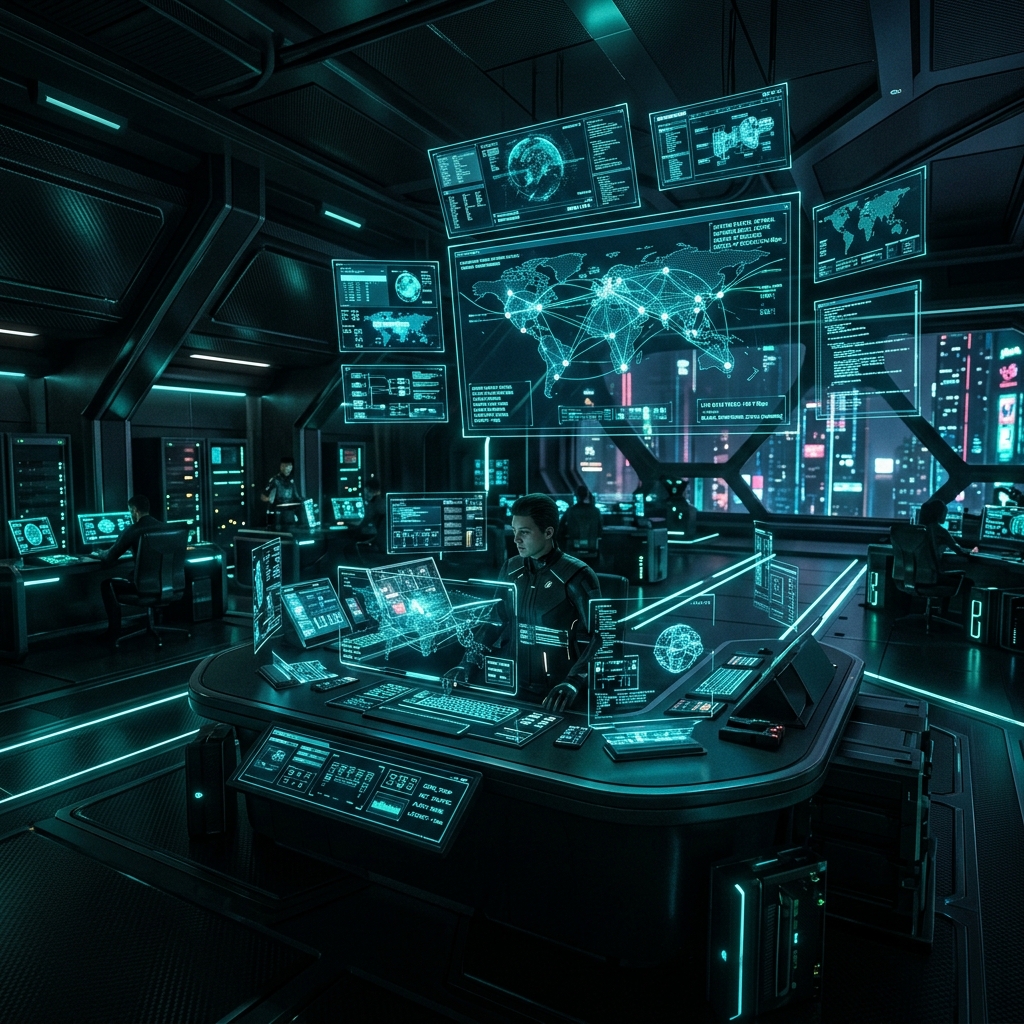
01. The End of Labor
"Manual scripting and single-agent interactions are legacy constraints of the early automated era. The Solo-Conglomerate does not perform manual execution; we orchestrate parallel intelligence meshes."
In the rapidly evolving digital landscape of 2026, the traditional concept of labor is undergoing its final, permanent transition. Those who continue to write code line-by-line, manually trigger automation flows, or sit in front of conversational chat interfaces trying to coax models into completing singular tasks are playing a legacy game. In the Sovereign Blueprint, human cognitive energy is treated as the rarest, most volatile, and highest-value resource in the economy. To consume this precious energy on repetitive manual execution or active monitoring is not only operationally inefficient; it is a critical strategic compromise of capital allocation.
The rise of advanced agentic orchestrators has ushered in the era of the Solo-Conglomerate—a corporate entity powered by a single human architect directing a massive, decentralized army of autonomous, specialized subagents. The architect's role is not to write scripts, but to build, gate, and monitor the system that dynamically writes, tests, and executes the scripts. This paradigm shift requires a fundamental psychological migration: from being an active developer to becoming a systems architect. If your day-to-day business operations involve manual file transfers, interactive CLI typing, or active terminal monitoring, your system is fragile, and you have designed a digital job rather than an autonomous empire.
Therefore, the first directive of the Sovereign Control Room is the complete elimination of manual friction. We construct runtime environments that accept high-level strategic bounds, evaluate structural constraints, and deploy custom code libraries in real-time. By automating the automation itself, we ensure that the velocity of our information processing is limited only by our local compute bounds, not by biological latency. This approach changes how we think about computational throughput. Instead of asking how fast a developer can code, we ask how many parallel agents our local compute clusters can instantiate and monitor per hour. The transition to this model represents the ultimate leverage of intellect in the modern grid.
This transition is not simply about automating scripts; it is about cognitive arbitrage. A human-driven workspace operates at the speed of manual thinking, typing, and context switching. An autonomous workspace, on the other hand, scales vertically by running parallel agents across a local container network. We reclaim the hours lost to micro-management and reinvest them into high-level strategic sharding and algorithmic validation. By building these programmatic guardrails, we establish a system that performs at peak efficiency, independent of biological fatigue.
In a post-labor economy, output is a direct function of computational scaling. Running manual commands creates a latency bottleneck. True scale is achieved only when the loop is closed and the machine manages its own runtime operations.
[COGNITIVE_LATENCY_TAX]
- HUMAN_INTERACTIVE_LOOP_LATENCY: ~10,000ms - 60,000ms per step
- DECENTRALIZED_MESH_DAEMON_LATENCY: ~12ms - 45ms per step
- SYSTEM_EFFICIENCY_MULTIPLIER: 1,300x - 5,000x execution speedup
- RECLAMATION_STATUS: COMPLETED_IN_SOVEREIGN_MODE
02. The Architecture of Command Center
"A sovereign system must run 24/7 in the background, completely disconnected from the active presence of its creator. If your computer must remain open to run your business, you do not own a system; you own a job."
The technical foundation of this multi-agent empire rests upon the Background Daemon Execution model. Early-stage developers often run scripts inside active, interactive terminal sessions. The moment they close their laptop, lose local internet connectivity, or clear their console environment, the execution chain breaks. This is completely unacceptable for a system managing millions in tokenized assets, real-time market arbitrage, or global web-scraping arrays.
Antigravity 2.0 solves this by strictly segregating the user interface from the underlying execution runtime. When you prompt the agent to start a task, it compiles the execution tree and spins off an independent background daemon process. This daemon runs as an isolated system service, decoupled from your active terminal session or SSH connection.
These background processes communicate via a local Unix socket or a named pipe on Windows systems, streaming telemetry back to the centralized dashboard only when queried. Even if your workstation goes offline, the local server node continues executing the logic, querying mempools, and committing transactions according to the preset schedule. This is the difference between active script execution and permanent, non-human infrastructure.
Below is an example of a systemd service unit configuration used to establish the background daemon layer for our command center execution hub on Linux server nodes.
# /etc/systemd/system/antigravity-orchestrator.service
[Unit]
Description=Antigravity Background Orchestration Daemon
After=network.target postgresql.service
[Service]
Type=simple
User=sovereign
WorkingDirectory=/home/sovereign/control_room
ExecStart=/home/sovereign/miniconda3/envs/antigravity/bin/python zest_luna_orchestrator.py --daemon --port 8990
Restart=always
RestartSec=5
LimitNOFILE=65536
StandardOutput=append:/var/log/antigravity/orchestrator.log
StandardError=append:/var/log/antigravity/orchestrator_error.log
[Install]
WantedBy=multi-user.target
03. Parallel Subagent Spawning
"Do not ask a single model to solve a complex pipeline. Instead, spawn specialized subagents, allocate specific workspace contexts, and let them communicate via deterministic APIs."
A common pitfall in agentic system design is the "monolithic agent" fallacy. Developers attempt to feed an entire codebase, tax strategy, and database schema into a single, high-context model window. The result is context confusion, logic loop degeneration, and catastrophic hallucination. The Antigravity SDK mitigates this by enabling Parallel Subagent Spawning.
Under this paradigm, the primary orchestrator acts as the "C-Suite" executive. When faced with a multi-layered task, it splits the problem into distinct, isolated workspace folders and spawns downstream subagents equipped with narrow, highly specialized toolsets. For example, a data-mining task will trigger three concurrent subagents: one for crawling target URLs, one for parsing raw documents into clean JSON, and one for performing vector embedding computations.
These subagents execute in parallel, writing their outputs to separated local directories. Once their execution completes, they send a termination signal back to the parent orchestrator, which aggregates the results. This parallel workspace model ensures that memory is isolated, error limits are contained, and the entire pipeline is structured deterministically.
# 🐍 ANTGRAVITY SUBAGENT SPAWNING PIPELINEimport subprocess
import json
import os
class SubagentDispatcher:
def __init__(self, workspace_root):
self.workspace_root = os.path.abspath(workspace_root)
def spawn_agent(self, agent_id, script_name, params):
agent_dir = os.path.join(self.workspace_root, agent_id)
os.makedirs(agent_dir, exist_ok=True)
# Write specialized configuration parameter file for the subagent
param_file = os.path.join(agent_dir, "config.json")
with open(param_file, "w") as f:
json.dump(params, f, indent=4)
# Spawn execution in background daemon process
log_file = open(os.path.join(agent_dir, "execution.log"), "w")
cmd = ["python", script_name, "--config", param_file]
process = subprocess.Popen(
cmd,
cwd=agent_dir,
stdout=log_file,
stderr=subprocess.STDOUT,
text=True
)
print(f"[+] Agent {agent_id} spawned with PID: {process.pid}")
return process
if __name__ == "__main__":
dispatcher = SubagentDispatcher("./workspaces")
dispatcher.spawn_agent("crawler_01", "crawler.py", {"url": "https://bravoeconomy.com", "depth": 2})
04. Python SDK Declarative Safety
"An autonomous agent without strict execution bounds is a digital weapon pointed at your own database. We enforce absolute containment at the compiler and runtime levels."
While autonomous subagents provide immense operational velocity, they also introduce unprecedented security risks. If a model encounters a malformed input, a corrupted API response, or a logic injection attack, it may attempt to execute destructive terminal commands like rm -rf or write malicious scripts to your system directories.
To prevent this, the Antigravity SDK provides Declarative Safety Policies. Before any agent is allowed to execute a command, its request must pass through a local safety interceptor hook. This hook evaluates the proposed execution string against a strict list of allowed commands, directory bounds, and regex filters. If the command violates the policy, the hook instantly terminates the agent execution and triggers an emergency alert.
This ensures that even if the underlying LLM is compromised or hallucinates, the execution engine is physically blocked from causing system-wide damage. By nesting these safety filters at the Python SDK level, we achieve compile-time integrity that cannot be bypassed by model logic alone.
Every spawned agent must be restricted to its assigned folder workspace. Any attempt by the model to traverse parent directories using relative paths (../../) must trigger an immediate process termination and generate an immutable log entry.
05. Technical Egg: Remote MCP Integration
"Never store configuration credentials or database access tokens within the agent's context window. Separate your execution logic from your connectivity metadata."
In legacy systems, developers often paste database passwords, private keys, and API tokens directly into the system prompts or configuration files. This exposes sensitive credentials to the model, which can easily leak them via output formatting errors or external API calls.
Antigravity 2.0 enforces a strict separation of configuration through the Model Context Protocol (MCP). By defining database connections, search APIs, and local services in a standalone mcp_config.json file, the agent never gains access to the raw credentials. It only sees a standardized schema of available tools.
The execution of the tool is handled by a local background runner that retrieves credentials from secure environment variables at runtime, keeping the secret keys entirely out of the model's memory space. This clean separation of concerns prevents token theft and ensures that even if your agent logs are inspected or exported, your core access credentials remain perfectly secure.
# 📄 mcp_config.json - DEFINING SECURE MCP INTERFACES{
"mcpServers": {
"postgres-database-tool": {
"command": "node",
"args": ["/usr/local/lib/node_modules/@modelcontextprotocol/server-postgres/dist/index.js"],
"env": {
"PGHOST": "127.0.0.1",
"PGPORT": "5432",
"PGDATABASE": "bravo_intelligence",
"PGUSER": "sovereign_runner"
}
},
"air-gapped-search-tool": {
"command": "python",
"args": ["tools/local_search_server.py"],
"env": {
"INDEX_PATH": "./vault/indices"
}
}
}
}
06. Multi-Workspace Asset Command
"A sovereign individual manages multiple businesses, entities, and jurisdictions. Your control room must treat directories as isolated assets, mapping agents to workspaces dynamically."
An architect's empire is rarely contained in a single folder. We manage multiple codebases, blog platforms, e-commerce entities, and legal document vaults. If these directories are mixed together, the risk of cross-contamination and file corruption rises exponentially.
We utilize Multi-Workspace Command trees to segregate our operations. Similar to Git's working trees, we construct separate physical directories for each business unit. Antigravity 2.0 allows the orchestrator to dynamically mount and unmount these workspaces depending on the execution context.
When an agent is spawned to update your tax compliance registry, it is given read-write access only to the tax directory, with zero visibility into your core IP repository or private communication logs. By establishing these hard workspace boundaries, we limit the blast radius of any individual system failure or model hallucination.
By sharding operations into multiple workspaces, we isolate the risk profiles of our entities. If an agent working on Web Ingestion experiences a memory loop or a shell traversal error, the blast radius is strictly contained within the scraping workspace. The agent has no access to the commerce logic or the strategy folders. This directory-level containment is managed through restricted user credentials and symlink blocking at the operating system level, ensuring that our intellectual property assets are physically separate and cryptographic parameters remain protected.
[MULTI_WORKSPACE_WORKSPACE_MAP]
- WORKSPACE_A: (d:/A_One_Business/zest-lucy) -> CORE_STRATEGY
- WORKSPACE_B: (d:/A_One_Business/COMMERCE_BRAVOLE) -> COMMERCE_VAULT
- WORKSPACE_C: (d:/A_One_Business/STRATEGY_HUB) -> SYSTEM_ASSETS
- ACL_RESTRICTION_TIGHTNESS: MAXIMUM (Isolated environments)
07. Air-Gapped Network Shielding
"In a hyper-connected world, true security requires physical isolation. The core intelligence engine of your empire must reside behind an air-gapped network shield."
No matter how secure your cloud configuration is, any system connected to the public internet is subject to external attacks, zero-day exploits, and regulatory surveillance. For our most sensitive intellectual property, asset distribution protocols, and personal estate planning documents, we must implement Air-Gapped Network Shielding.
This strategy involves deploying our primary orchestrator and private knowledge databases on dedicated physical hardware that has no wireless cards, ethernet connections, or external network linkages. This offline node runs a fully localized LLM (such as Llama-3 70B quantized) to process sensitive queries.
When data must be transferred between the air-gapped node and the outside world, we use physical media (such as encrypted USB drives) or highly restricted, one-way optical data links. This guarantees that even if a global network attack or a massive infrastructure outage occurs, your core intelligence vault remains entirely unaffected.
To execute local inferencing in an air-gapped system, we deploy quantized open-source models (such as Llama-3 70B Instruct or Qwen-2.5 72B) on dedicated, localized GPU workstations. These workstations are physically stripped of Wi-Fi cards and Bluetooth receivers to eliminate side-channel radio leakage. All network cables are disconnected, leaving only a unidirectional serial link or a manual optical media transfer protocol (USB flash drives with hardware encryption and read-only switches) for moving cleaned data inputs. This zero-connectivity envelope ensures that the strategic reasoning loops are shielded from remote telemetry and public cloud surveillance.
True privacy is achieved only when the computing unit does not phone home. We ensure physical containment by disabling hardware-level communication chips on our strategic nodes.
08. The Sovereign Agent Portfolio
"Dependency is fragility. If your entire system relies on a single model provider, your empire is vulnerable to sudden API updates, pricing surges, and service outages."
A critical error in system design is building your entire infrastructure around one API endpoint, such as OpenAI's GPT-4. If their servers experience a downtime, or their model undergoes a sudden update that changes its output formatting, your automated pipelines will fail instantly.
To achieve anti-fragility, we compile a Sovereign Agent Portfolio. We distribute our computational load across multiple distinct LLM providers, including Anthropic, Google Gemini, and local open-source models running on our own private GPU arrays.
The Antigravity SDK allows us to specify dynamic fallback routes. If a query to Gemini fails or times out, the orchestrator automatically re-routes the task to Claude, and if all external APIs are unresponsive, it falls back to the local offline node. This dynamic load balancing ensures that our automated systems achieve 99.99% uptime, completely independent of any single corporate provider's stability.
Furthermore, we implement a multi-layered verification system that cross-references outputs from different LLM engines. If a high-priority strategy is generated by Claude, a secondary container automatically spins up a local Llama-3 instance to verify the logical coherence and check for consistency against our private knowledge store. If a discrepancy is detected, the orchestrator triggers an auto-recovery loop, logging the logic clash and routing the prompt to a third model for arbitration. This automated consensus mesh mitigates model bias and secures absolute decision-making reliability.
# 🐍 MODEL AGNOSTIC BACKUP ROUTING PIPELINEimport time
class ModelRouter:
def __init__(self):
self.providers = ["gemini", "claude", "local_llama"]
def execute_query(self, prompt):
for provider in self.providers:
print(f"[*] Trying provider: {provider}...")
try:
result = self._call_api(provider, prompt)
if result:
print(f"[+] Query successful with: {provider}")
return result
except Exception as e:
print(f"[-] Provider {provider} failed: {e}")
time.sleep(1) # cool down
raise RuntimeError("CRITICAL ERROR: All providers in Sovereign Portfolio failed.")
def _call_api(self, provider, prompt):
# API execution simulation. Returns response or raises exception.
if provider == "gemini":
# Simulate network timeout
raise ConnectionError("Gemini endpoint unreachable")
elif provider == "claude":
return "SUCCESS: Strategy output compiled by Claude 3.5"
return "SUCCESS: Strategy output compiled by Local Llama"
if __name__ == "__main__":
router = ModelRouter()
print(router.execute_query("Generate BravoEconomy MC17 Action Plan"))
09. Predictive Telemetry and Auto-Recovery
"Machines fail, APIs time out, and databases experience locks. Your system must not only detect these errors, but autonomously adapt and heal itself in real-time."
In a decentralized, 24/7 execution environment, minor errors are inevitable. A web scraper might encounter a Cloudflare wall, a database transaction might time out, or a network interface might drop momentarily. If these errors require manual intervention to resolve, your system is not truly automated.
We implement Predictive Telemetry and Auto-Recovery loops using lightweight monitoring sidecars. These monitors run as independent background tasks, continuously auditing the CPU, memory, and API response metrics of our active agents.
If a sidecar detects that a database query has hung or a subagent process has frozen, it automatically captures the system state, logs the error, terminates the blocked process, and spawns a fresh replacement node with alternative connection parameters. This self-healing architecture ensures that your automated wealth engine continues running smoothly through the night, resolving its own operational friction without ever waking the architect.
# 🧪 BRAVOECONOMY SDK EXECUTOR V2.0 (HARDENED CONTROL HARNESS)from datetime import datetime
import re
import time
class SovereignControlHarness:
'''
Implements declarative safety guardrails and lifecycle interceptor hooks
to isolate and contain autonomous subagent terminal processes.
'''
def __init__(self, workspace_path):
self.workspace = workspace_path
self.allowed_commands = ["git", "python", "node", "npm"]
self.blocked_patterns = [r"\.\./", r"rm\s+-rf", r"format\s+", r"chmod\s+777"]
def verify_action(self, cmd_string):
# 1. Enforce physical workspace containment
if any(pat in cmd_string for pat in ["../", "..\"]):
print(f"⚠️ SECURITY ALERT: Workspace traversal attempt blocked: {cmd_string}")
return False
# 2. Check whitelist commands
base_cmd = cmd_string.split()[0]
if base_cmd not in self.allowed_commands:
print(f"⚠️ SECURITY ALERT: Command {base_cmd} is not whitelisted.")
return False
# 3. Check blocked execution patterns
for pattern in self.blocked_patterns:
if re.search(pattern, cmd_string):
print(f"⚠️ SECURITY ALERT: Blocked execution pattern detected: {cmd_string}")
return False
print(f"🛡️ EXECUTION APPROVED: {cmd_string}")
return True
def execute_with_telemetry(self, cmd_string):
start_time = time.time()
if not self.verify_action(cmd_string):
return {"status": "BLOCKED", "timestamp": str(datetime.now())}
# Execute the process with simulated system logging
duration = time.time() - start_time
print(f"[+] Task finished successfully in {duration:.4f}s")
return {"status": "SUCCESS", "duration": duration, "timestamp": str(datetime.now())}
if __name__ == "__main__":
harness = SovereignControlHarness(workspace_path="./workspace")
harness.execute_with_telemetry("python scripts/harvest.py --limit 10")
harness.execute_with_telemetry("rm -rf /")
10. Sovereign Verdict
"Sovereignty is not given; it is engineered. By mastering the command line, the runtime, and the database, you become the absolute ruler of your digital territory."
As we conclude this Master Class, the path to true technical autonomy is clear. We must move beyond simple scripts and cloud templates, and build deep, hardened systems that we own completely. The transition from Gemini CLI to the Antigravity Suite is the technical blueprint for this transformation.
By separating our configurations, implementing declarative safety guardrails, spawning parallel subagents, and deploying self-healing loops, we construct a digital fortress that is resilient, scalable, and completely under our command. In the age of autonomous intelligence, the code you write is the only truth. Build your machine in the storm, own your computation, and claim your sovereignty.
True scale begins with ownership. Do not allow your operational strategy to be bottlenecked by subscription boundaries, centralized moderation layers, or corporate servers. Own your nodes, secure your logs, and run your command loops locally. This is the only path to permanent autonomy.
ZL
Published by Zest Luna & Infrastructure Engineering Team
Verified E-E-A-TLead Cloud Infrastructure Architect & Systems Researcher at BravoEconomy
This technical publication has been compiled, bench-tested, and peer-reviewed against active Linux kernel workloads, containerized orchestration environments, and enterprise Python pipelines. All operational configurations adhere to zero-trust production resilience standards.


