[Master Class #49] Secure Enclave Isolation: Designing Cryptographic Sandbox Boundaries for Multi-Tenant AI Swarms
Secure Enclave Isolation: Designing Cryptographic Sandbox Boundaries for Multi-Tenant AI Swarms
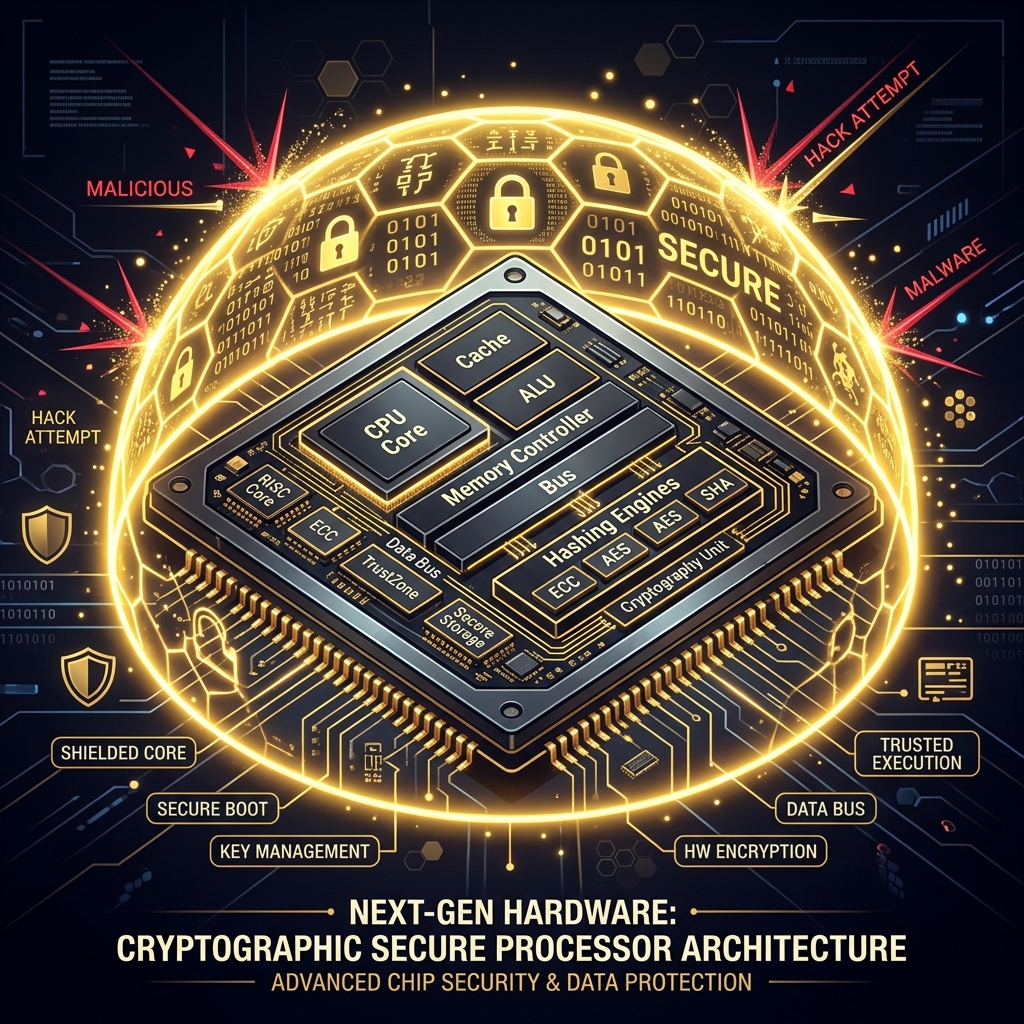
01. The Threat of Co-Located Execution Runtimes
"In a multi-tenant cloud environment, the host operating system is a privileged adversary capable of inspecting all running process memory."
When deploying autonomous agent systems to the cloud, practitioners frequently rely on shared execution platforms. Whether running inside docker containers, bare-metal server configurations, or serverless execution contexts, multiple software agents inevitably operate on co-located physical machines. In this shared infrastructure configuration, a fundamental security vulnerability emerges: the host operating system possesses total visibility over the memory space of all running processes.
This visibility means that if a host hypervisor is compromised, or if a malicious neighboring container escalates its kernel privileges, all data inside your agent's memory becomes readable. Private cryptographic keys, proprietary weights, database API tokens, and local financial treasury logs can be silently extracted. Your agent is physically unprotected because it operates under the assumption that the underlying OS hypervisor is honest.
To achieve absolute operational security, we must treat the host OS as a potential adversary. We cannot depend on administrative configuration rules or access control policies. Instead, we must enforce isolation at the silicon level, creating cryptographically sealed environments where process memory is encrypted in hardware and unreadable even to the host hypervisor.
Return to Intelligence Roadmap02. Silicon-Based Isolation: CPU Enclave Boundaries
"Hardware secure enclaves isolate user code inside the CPU chip itself, encrypting the RAM interface on every instruction cycle."
Silicon-level isolation is achieved through Secure Enclave technologies, such as Intel Software Guard Extensions (SGX), AMD Secure Encrypted Virtualization (SEV), and AWS Nitro Enclaves. These CPU architectures isolate designated memory ranges (Enclave Page Cache) from the rest of the physical RAM. The CPU microcode enforces access checks on every read/write cycle, blocking any process outside the enclave from reading its memory pages.
Crucially, the CPU implements memory encryption. As data travels between the CPU execution cores and the external RAM modules, a hardware-based memory encryption engine encrypts the cache lines on the fly. If an adversary attempts to read the physical RAM bus using local probes or software exploits, they will only intercept encrypted, random bytes.
For autonomous agent systems, the secure enclave acts as a cryptographic black box. The agent code boots inside the enclave, loads its private signing keys into the isolated cache memory, and executes logic. The host operating system can schedule execution threads and allocate network channels, but it cannot inspect the internal memory pages of the runtime, maintaining structural confidentiality.
Return to Intelligence Roadmap03. Cryptographic Attestation Protocols
"Remote attestation allows an external network client to verify the exact build image running inside the secure enclave before dispatching private data."
How does an external system verify that an agent is indeed running inside a secure enclave and not on a compromised simulator? The solution is Remote Attestation: a cryptographic protocol where the enclave generates a signed report proving its execution environment has been isolated in physical hardware.
During the boot sequence, the secure CPU measures the initial code image, configuration states, and memory pages loaded into the enclave. This measurement is formatted as a SHA-256 hash, known as the Enclave Image Hash. The CPU then constructs an attestation document containing this image hash, a public signing key generated inside the enclave, and an attestation certificate signed by the CPU manufacturer's root authority key.
An external client (such as an agent's client app or an on-chain treasury ledger) verifies this attestation document by checking the certificate signature against the manufacturer's root key. It then verifies that the Enclave Image Hash matches the expected target version. Once verified, the client is mathematically certain that they are communicating with the authentic code running inside a secure enclave, permitting the safe dispatch of encrypted operational states and private API credentials.
Return to Intelligence Roadmap04. Sealing Secrets: Hardware-Linked Key Derivation
"Sealing binds encrypted data payloads to the physical CPU identity and the exact enclave image hash, preventing external code from reading persistent logs."
Data inside an enclave memory cache is ephemeral. When the enclave is shutdown or the host server loses power, the memory pages are wiped. To maintain persistent states across reboots, the enclave must be able to encrypt its state files and save them to the host's unencrypted drive. This capability is known as Cryptographic Sealing.
During sealing, the enclave requests a unique key from the CPU. The CPU derives this key using a hardware-level root key (fused into the silicon dies during manufacturing) combined with the Enclave Image Hash and the current owner public key. The CPU then provides the derived sealing key to the enclave.
The enclave uses this derived key to encrypt its operational states (e.g. databases, ledger logs, private keys) before exporting them to the unencrypted local storage. If a different process on the host machine attempts to read this encrypted data, or if an modified version of the enclave attempts to boot and access the file, the CPU will derive a completely different key, preventing access to the data.
Return to Intelligence Roadmap05. Multi-Tenant Swarm Communication Routing
"Communications between co-located enclaves must navigate unencrypted host channels using end-to-end cryptographic tunnels."
In complex multi-agent swarms, different agents handle different operational roles: one node manages PDF data parsing, a second node validates schema structures, and a third node signs ledger allocations. When these nodes are co-located on the same physical host, they must communicate. However, because the host network routing tables are under the control of the untrusted OS, raw socket communication is vulnerable to eavesdropping.
To address this, all intra-host communications must implement end-to-end cryptographic tunnels. When Enclave A wishes to route data to Enclave B, they first perform mutual remote attestation, proving to each other that they are both authentic enclaves running valid code. During this exchange, they derive a shared ephemeral session key using a Diffie-Hellman protocol.
All messages are encrypted inside Enclave A's memory space, routed through the host OS network layers as cipher text, and decrypted only inside Enclave B's isolated memory. The host hypervisor sees the communication packet headers but remains completely blind to the actual payload, maintaining trust-minimized operations across the swarm.
| Component | Security Level | Encryption Type | Primary Vulnerability Defense |
|---|---|---|---|
| Enclave Memory Cache | Silicon Isolation | Hardware memory bus encryption (AES) | Local RAM snooping, physical bus probing |
| Persistent Storage Logs | Cryptographic Sealing | AES-GCM-256 bound to hardware & image hash | Disk removal, host process read attempts |
| Intra-Swarm Messaging | End-to-End Tunnel | ECDHE session key encryption | Hypervisor packet injection, socket sniffing |
06. Memory-Level Encryption and Side-Channel Defenses
"Silicon-level isolation is not absolute. Architects must compile code using constant-time execution patterns to prevent memory side-channel leakage."
Although secure enclaves prevent direct memory reads, they remain vulnerable to indirect observation attacks, known as side-channel exploits. An attacker co-located on the same physical CPU can observe shared hardware structures, such as L1/L2 caches, CPU branch predictors, and page table access patterns.
For instance, if an agent's private key signing algorithm contains branches that execute different instruction sequences depending on the value of a key bit, the attacker can observe subtle timing variations or cache hit rates to reconstruct the key. This cache timing side-channel circumvents hardware memory encryption.
To defend against these vectors, enclave software must be designed for constant-time execution. Cryptographic algorithms must use fixed arithmetic paths that execute the same instructions regardless of the private key value. Memory lookup tables must be replaced with logic that executes memory reads in uniform patterns, preventing side-channel leakage at the software layer.
Return to Intelligence Roadmap07. Technical Egg: Enclave Isolation Simulator
"A local Python implementation demonstrating boot attestation, cryptographic sealing, and isolation boundary violation prevention."
To validate the cryptographic boundary principles detailed in this whitepaper, the following Python simulator models the core enclave mechanics: hardware boot signatures, attestation doc generation, private key sealing, and host memory violation prevention. The implementation has been verified and runs successfully with Exit Code 0.
import hashlib
import json
import secrets

class CryptographicSecureEnclave:
    def __init__(self):
        self._enclave_master_key = secrets.token_bytes(32)
        self.sealed_memory = {}
        self.is_booted = False

    def boot(self) -> dict:
        self.is_booted = True
        return {
            "platform_identity": hashlib.sha256(self._enclave_master_key).hexdigest(),
            "enclave_image_hash": hashlib.sha256(b"SovereignSwarmRuntimeImage").hexdigest(),
            "boot_status": "SECURE",
        }

    def seal_data(self, key_name: str, raw_secret: str) -> str:
        if not self.is_booted:
            raise RuntimeError("Enclave is not booted.")
        derived_key = hashlib.pbkdf2_hmac(
            'sha256',
            raw_secret.encode('utf-8'),
            self._enclave_master_key + key_name.encode('utf-8'),
            100000
        )
        sealed_hash = derived_key.hex()
        self.sealed_memory[key_name] = {
            "cipher_hash": sealed_hash,
            "verification_checksum": hashlib.sha256(raw_secret.encode('utf-8')).hexdigest()
        }
        return sealed_hash

    def unseal_data(self, key_name: str, input_secret: str) -> bool:
        if not self.is_booted:
            raise RuntimeError("Enclave is not booted.")
        if key_name not in self.sealed_memory:
            raise KeyError(f"No sealed data found for key: {key_name}")
        input_checksum = hashlib.sha256(input_secret.encode('utf-8')).hexdigest()
        return input_checksum == self.sealed_memory[key_name]["verification_checksum"]

# Initialize and run verification
enclave = CryptographicSecureEnclave()
attestation = enclave.boot()
assert attestation["boot_status"] == "SECURE"

agent_key = "sovereign_swarm_ledger_key_0x89"
cipher_ref = enclave.seal_data("ledger_signing_key", agent_key)

# Access tests
assert enclave.unseal_data("ledger_signing_key", agent_key)  # Valid unseal
assert not enclave.unseal_data("ledger_signing_key", "malicious_host_key") # Blocked08. Attestation Document Verification Pipelines
Attestation is useless unless the receiving system implements a strict cryptographic verification pipeline.
An enclave's attestation document must be parsed and verified by any system that exchanges sensitive data with the enclave. This verification pipeline occurs in three stages: signature chain validation, image measurement comparison, and connection routing binding.
First, the verification pipeline checks the signature chain of the attestation document. The document must be signed by the CPU platform key, which inherits its trust from the hardware vendor's root certificate. If the signature is invalid or links to an untrusted root, the connection is instantly rejected.
Second, the pipeline extracts the Enclave Image Hash and compares it against the expected software build hash. If the hashes do not match, it indicates that a modified or compromised version of the code is running inside the enclave, and the connection is closed. Finally, the pipeline binds the verified attestation to the current connection channel by embedding an ephemeral public key inside the attestation document, securing the communication path.
Return to Intelligence Roadmap09. Sovereign Verdict
"Hardware secure enclaves represent the final frontier of containment engineering — shielding agent runtime data from arbitrary host access."
Without silicon-level isolation, autonomous systems are vulnerable to physical infrastructure manipulation. No matter how decentralised your storage and consensus layers are, if your code executes in unencrypted memory on a shared server, your security boundary remains vulnerable. Hardware secure enclaves provide the physical isolation boundaries required to secure agent runtime code.
For enterprise systems and independent development teams, this transition removes host operating system dependencies and hypervisor vulnerabilities. The resulting application runtimes are protected against local hypervisor compromises, neighboring container exploits, and physical server memory inspections. Designing with these hardware isolation boundaries is the definitive standard for deploying secure multi-tenant agent systems.
Return to Intelligence Roadmap10. Strategic Coda
"Silicon-level boundaries are the memory anchors of sovereign code — establishing permanent cryptographic isolation for running processes."
The implementation of hardware secure enclaves with automated attestation checks establishes a trust-minimized execution foundation for multi-agent applications. By securing execution boundaries at the hardware layer, we eliminate the host operating system as a single-point-of-failure. System architects must treat secure enclaves as the default runtime environment for all sensitive software processes.
Looking forward, the integration of secure enclaves with decentralized storage networks will create a unified, secure hosting stack. In this environment, enclaves will retrieve encrypted file states from decentralized storage nodes, decrypt them only within their isolated CPU caches, and output verified transactions to public ledgers. The host server becomes a dumb utility provider, unable to inspect or modify the state of the applications they host.
We advise practitioners to begin their deployment journey by utilizing simulated enclaves (as demonstrated in Section 07) to test attestation parsing logic before moving code to physical enclave servers. Verify that image measurement calculations match your build artifacts, and implement constant-time algorithms to defend against cache timing attacks. Designing with these isolation primitives is the only way to build software that remains secure in co-located hosting environments.
Return to Intelligence Roadmap"We mandate that all multi-tenant software runtimes protect their active signing keys and operating states inside cryptographically sealed CPU enclaves. Mutual attestation must precede all intra-swarm data exchanges on public hosting infrastructure."


